
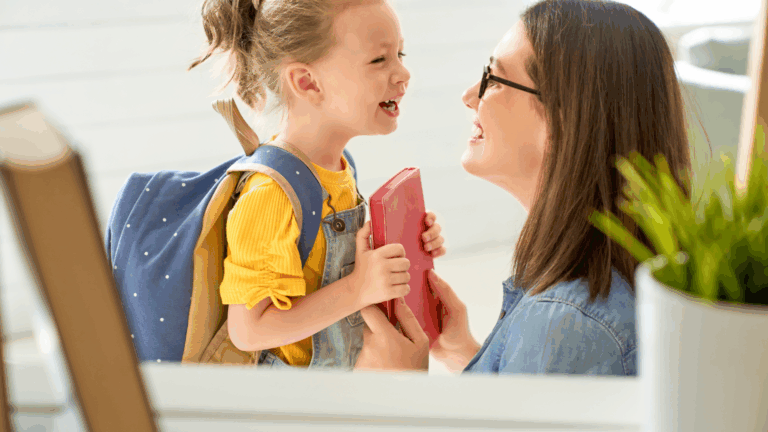
Young children watch everything you do.
The way you speak, the way you handle stress, and even the way you resolve small daily problems all become lessons they absorb long before they can fully explain their own emotions.
When a child is learning emotional regulation, your example becomes one of the strongest tools for helping them grow.
Modeling healthy communication and problem-solving doesn’t require perfection.
It simply asks you to be intentional about the behavior you want your child to learn.
The everyday moments in your home can become powerful opportunities to teach your child how to express feelings, work through challenges, and navigate conflict with confidence.
This article will help you understand how your behaviors influence your child’s emotional development and how you can model communication and problem-solving skills in ways that feel natural, calm, and effective.
Understanding What Healthy Communication Looks Like for Young Children
For young children, communication is still very new.
They are just beginning to learn how to use words, gestures, and behaviors to express feelings and needs.
Because of this, communication they see from you carries enormous weight.
Healthy communication for a child includes simple words, gentle tones, and expressions that show respect and understanding.
Children pay close attention to your voice, your posture, and even your facial expressions.
When you model calmness and clarity, they begin to understand what safe and respectful communication looks like.
If you speak with patience and warmth, they naturally begin to do the same.
Children learn far more from what you demonstrate than from any instructions you give.
You can tell them to “use kind words,” but they truly learn the meaning of that phrase when they watch you speak kindly, even during stressful moments.
How Your Communication Style Shapes Emotional Development
A child often learns emotional regulation by watching how adults manage their own feelings.
If you stay steady and calm during frustration, your child absorbs that.
If you respond with patience when a situation feels overwhelming, your child sees what emotional regulation looks like in action.
On the other hand, if communication is rushed, loud, or tense, a child may interpret that as the normal way to respond during stress.
Young children mirror the emotional energy in the room, especially the energy coming from the adults they trust the most.
Your communication style also helps build a sense of emotional safety.
When a child sees that you consistently respond with understanding, they feel more secure expressing their own feelings.
This emotional safety is essential for learning how to regulate themselves.
When your reactions are predictable, your child learns that feelings both theirs and yours can be handled in safe and stable ways.
Modeling Calm Behavior During Challenging Moments
Challenging moments are often the most valuable teaching opportunities.
When your child is upset, frustrated, or overwhelmed, your calm response shows them how to handle big emotions in a healthier way.
Simple techniques such as taking a slow breath, pausing before responding, or lowering your voice help your child understand how calm behavior looks and sounds.
Narrating your feelings in a child-friendly way can be especially powerful.
For example, saying something like, “I’m feeling frustrated, so I’m taking a deep breath,” teaches your child that emotions aren’t dangerous and that managing them is possible.
Even when you don’t feel calm inside, modeling composure helps your child understand how to slow down their own emotional reactions.
Children do not expect perfection, but they benefit deeply from seeing that calmness is possible during difficult moments.
Sign up for our Parenting Courses today!
Turning Everyday Moments Into Communication Practice
Young children learn communication through repetition, practice, and observation.
Everyday situations in your home give you plenty of opportunities to teach healthy communication in small, natural ways.
For example, if your child wants something at the same time you’re busy, you can model healthy expression by saying, “I hear that you want help, and I will help you as soon as I’m done.”
This teaches a child how to express needs without demanding or melting down.
Misunderstandings, delays, and transitions can also become small learning moments.
When you respond with patience, clarify expectations, or restate your needs calmly, your child absorbs the structure of healthy communication.
The more often you model these moments, the more familiar and comfortable they become for your child.
Helping Children Identify and Talk About Their Feelings
Young children often feel emotions intensely but lack the vocabulary to express them.
A big part of healthy communication is helping your child develop the language that matches their emotional experiences.
Using simple emotional words, happy, sad, scared, frustrated helps young children label how they feel.
Connecting emotions to physical sensations can also help.
You might say, “Your body looks tight. Sometimes tight muscles mean you’re feeling mad or overwhelmed.”
Validating feelings, instead of dismissing them, shows your child that emotions are normal.
When a child feels seen and understood, they are more willing to try expressing themselves through words rather than actions.
Sign up for our Parenting Courses today!
Introducing Problem-Solving in Age-Appropriate Ways
Problem-solving for young children doesn’t need to be complicated.
In fact, simple steps work best.
Start by breaking a problem into small, manageable pieces.
If a toy breaks, instead of showing frustration, you can model problem-solving by saying, “Let’s look at the toy together and see what part isn’t working.”
If there’s a conflict between siblings, show them how to pause, talk, and take turns.
Giving choices is also a helpful strategy.
Instead of solving everything for your child, ask questions like, “Do you want to try this or that?”
Offering options helps your child feel empowered and involved in the process.
These small moments teach your child that problems can be solved calmly and collaboratively.
Guiding Children Through Conflict Without Taking Over
Conflict is a natural part of childhood, especially when children are still learning communication skills.
During conflict, your role isn’t to solve everything for your child but to guide them through the process.
Encourage your child to use their words instead of reacting physically.
Show them how to listen, take turns speaking, and think about the other person’s perspective.
Instead of stepping in immediately, coach them through what to say, such as, “Tell your brother how you feel,” or “Ask her for a turn.”
This approach teaches children that conflicts can be worked through respectfully and calmly, helping them build lifelong communication skills.
Using Consistency to Strengthen Communication Skills
Consistency plays a huge role in helping children learn emotional regulation and communication skills.
When you use the same phrases or steps during stressful moments, your child begins to understand what comes next.
Predictable routines help them feel safe and less overwhelmed.
Repeating communication strategies like staying calm, using clear instructions, and offering choices helps your child practice them until they feel natural.
Children thrive when expectations are stable and communication remains steady.
Sign up for our Parenting Courses today!
Helping Children Stay Regulated When Emotions Get Big
Young children need support and structure when emotions become overwhelming.
n those moments, communication should stay simple, calm, and clear.
Short phrases are easier for a dysregulated child to understand.
Creating a safe calming space can be helpful.
It might be a quiet corner with pillows, books, or sensory items.
This isn’t a punishment, it’s a place where your child can feel supported while they settle their emotions.
Offering comfort, understanding, and gentle guidance helps children learn that big emotions don’t need to be feared or avoided, they can be managed and understood.
Showing Problem-Solving Through Real-Life Examples
Children need to see you problem-solve in real time.
Everyday situations like running late, plans changing unexpectedly, or losing an item become valuable modeling opportunities.
Showing patience and flexibility teaches your child that problems don’t require panic.
You might say, “This didn’t go the way I expected, so I’m thinking of another solution.”
When children see that mistakes or setbacks are manageable, they become more confident and less reactive in stressful moments.
These real-life demonstrations teach children that solutions can be creative, calm, and steady.
Sign up for our Parenting Courses today!
Teaching Repair and Reconnection After Conflict
Every family has moments of frustration or conflict.
What matters most is how you reconnect afterward.
Repairing with your child, apologizing, explaining, and reconnecting teaches them that relationships stay strong even when things go wrong.
Apologizing shows them that taking responsibility is a healthy behavior.
It also teaches empathy and reinforces trust.
When a child sees you repair after conflict, they learn that mistakes don’t break relationships, they create opportunities for growth.
Recognizing When Your Child Needs Extra Support
Some children struggle more than others with emotional regulation, communication, or problem-solving.
Noticing signs of overwhelm, ongoing frustration, or difficulty calming down can help you know when additional support might be helpful.
Seeking guidance from a pediatrician, counselor, or teacher can give you new strategies and reassurance.
It also models for your child that asking for help is a healthy and normal part of life.
Sign up for our Parenting Courses today!
Conclusion
Modeling healthy communication and problem-solving skills is one of the most powerful ways to support your child’s emotional development.
Every calm response, every gentle explanation, and every small moment of patience becomes part of the foundation your child uses to understand themselves and others.
You don’t need to be perfect.
You simply need to show your child what healthy communication looks like through your actions, your words, and your willingness to guide them with love and consistency.
If you’d like, I can shorten this article, make it more conversational, or rewrite it in a different tone.
Sign up for our Parenting Courses today!

- How Foster Parents Can Support a Child Through Grief and Loss - May 12, 2026
- How Stability and Routine Help Foster Children Heal - May 12, 2026
- Why Foster Children Often Test Boundaries and Push Adults Away - May 12, 2026


Leave a Reply