
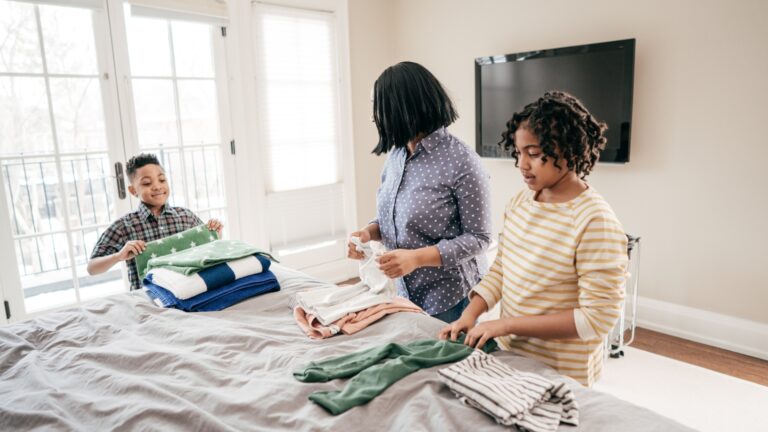
Involving kids in household chores can be a challenging task, but it’s an essential part of teaching responsibility, building life skills, and fostering independence.
By making chores engaging and educational, you can transform these daily tasks into valuable learning experiences that your children will actually enjoy.
This article will provide practical advice on how to make chores fun and educational, tailored to your child’s age and abilities, and help you establish routines that will instill a sense of responsibility and pride.
Why Involving Kids in Chores is Important
Involving your children in household chores is about more than just getting help around the house.
It’s an opportunity to teach them responsibility and accountability, build life skills, and foster a sense of contribution and belonging in the family.
When kids participate in chores, they learn the value of hard work and the importance of contributing to the household.
These lessons are crucial for their development and will serve them well throughout their lives.
Sign up for our Parenting Courses today!
Making Chores Engaging and Enjoyable
Turning Tasks into Games
One effective way to make chores more engaging is by turning them into games.
You can create fun challenges like “speed cleaning” where you set a timer and see who can pick up the most toys in a minute.
Another idea is to create a chore bingo card with different tasks, and your children can earn rewards for completing a row.
This approach not only makes chores fun but also introduces an element of competition that can motivate kids to participate eagerly.
Using Music
Music can be a great motivator for kids.
Create a chore-time playlist with upbeat songs that your children enjoy.
Let them have a mini dance party while they clean, or play their favorite tunes while they help with the dishes.
Music makes the time pass quickly and turns mundane tasks into enjoyable activities.
Incorporating Rewards and Incentives
Rewards and incentives can be powerful motivators.
Set up a reward system where your children earn points for each chore they complete.
These points can be exchanged for small treats, extra playtime, or a special outing.
Chore charts with stickers or checkmarks can visually track their progress and give them a sense of accomplishment.
Sign up for our Parenting Courses today!
Educational Opportunities Through Chores
Time Management and Organization
Chores provide an excellent opportunity to teach time management and organization.
You can help your children learn to manage their time by scheduling chores at specific times each day.
Encourage them to prioritize tasks, like completing homework before starting their chores.
This practice helps them understand the importance of managing their responsibilities efficiently.
Teamwork and Collaboration
Working together on chores can build teamwork and collaboration skills.
Assign tasks that require cooperation, such as setting the table or cleaning a room together.
This teaches your children how to work as part of a team, share responsibilities, and communicate effectively.
It also fosters a sense of family unity as everyone works towards a common goal.
Problem-Solving and Critical Thinking
Certain chores can help develop problem-solving and critical thinking skills.
For example, sorting laundry by color and type teaches categorization and attention to detail.
Cooking together involves following recipes and measuring ingredients, which can enhance math skills and sequential thinking.
Encourage your children to find solutions to problems that arise during chores, such as figuring out how to fit all the dishes into the dishwasher.
Sign up for our Parenting Courses today!
Tailoring Chores to Age and Abilities
Age-Appropriate Chores
Assigning age-appropriate chores is crucial to ensure that tasks are manageable and suitable for your children’s abilities.
Younger children can handle simple tasks like picking up toys, dusting, or watering plants. School-age children can take on more responsibilities like making their beds, setting the table, and helping with meal preparation.
Teenagers can manage more complex chores like mowing the lawn, doing laundry, and cooking meals.
Adjusting Tasks to Abilities
Consider your child’s individual abilities and limitations when assigning chores.
If a task seems too challenging, break it down into smaller, more manageable steps. Provide guidance and support to help them succeed.
Adjust tasks as needed to match their skill level, and gradually increase responsibilities as they grow and develop new skills.
Establishing Routines and Consistency
Importance of Routine
Establishing a routine helps children develop good habits and understand what is expected of them.
Set specific times for chores each day and stick to the schedule.
Consistent routines create a sense of stability and predictability, which can make children feel more secure and confident in their responsibilities.
Consistency in Expectations
Consistency is key to building discipline and reliability.
Clearly communicate your expectations for chore completion and follow through with consequences if chores are not done.
Consistency helps children understand the importance of their responsibilities and the impact of their actions on the household.
Sign up for our Parenting Courses today!
Using Positive Reinforcement
Forms of Positive Reinforcement
Positive reinforcement can encourage your children to participate in chores willingly.
Praise and verbal acknowledgment are simple yet effective forms of reinforcement.
Let your children know that you appreciate their efforts and recognize their hard work.
Small rewards, such as extra playtime or a special treat, can also motivate them to complete their chores.
Encouraging Participation
Positive reinforcement creates a positive association with chores and encourages participation.
When children feel appreciated and rewarded for their efforts, they are more likely to engage in chores with enthusiasm and a sense of pride.
Sign up for our Parenting Courses today!
Creative Ways to Integrate Learning into Chores
Combining Educational Activities
Integrate educational activities into chores to make them more engaging and beneficial.
For example, counting and sorting laundry can reinforce math skills.
Measuring ingredients while cooking teaches fractions and measurement concepts.
Recycling activities can educate children about environmental responsibility and sustainability.
Educational Tools and Resources
Utilize educational tools like books, videos, and apps to make chores more interesting.
Educational videos on topics like cooking, cleaning, or organizing can provide valuable insights and tips.
Interactive apps can turn chores into fun learning experiences, offering challenges and rewards for completing tasks.
Involving the Whole Family
Benefits of Family Teamwork
Involving the entire family in chores fosters teamwork and strengthens family bonds.
Working together towards a common goal teaches children the value of collaboration and mutual support.
It also creates a sense of shared responsibility and accomplishment.
Creating a Collaborative Environment
Encourage every family member to contribute to household chores.
Assign tasks based on each person’s abilities and preferences.
Rotate chores to ensure variety and prevent monotony.
A collaborative environment promotes fairness and reinforces the idea that everyone plays a role in maintaining the household.
Sign up for our Parenting Courses today!
Overcoming Common Challenges
Addressing Resistance
It’s common for children to resist doing chores.
Address resistance by explaining the importance of chores and how they benefit the household.
Offer choices to give them a sense of control, such as letting them pick between two tasks.
Make chores less daunting by breaking them into smaller steps and providing support and encouragement.
Practical Solutions
To overcome common challenges, create a chore schedule that fits your family’s routine.
Use visual aids like chore charts to track progress.
Make chores a regular part of daily life, rather than an occasional requirement.
Consistency and clear expectations can help reduce resistance and build good habits.
Sign up for our Parenting Courses today!
Tracking Progress and Celebrating Achievements
Methods for Tracking Chore Completion
Track chore completion using chore charts, apps, or other tools. Visual aids help children see their progress and stay motivated.
Regularly update the charts to reflect completed tasks and reward their efforts.
Celebrating Successes
Celebrate your children’s achievements to reinforce their positive behavior.
Acknowledge their hard work with praise and small rewards.
Celebrating successes boosts their self-esteem and encourages continued participation in chores.
Communicating About Chores
Discussing the Reasons Behind Chores
Effective communication is key to getting children on board with chores.
Explain why chores are necessary and how they contribute to the household.
Discuss the benefits of responsibility and teamwork.
Understanding the reasons behind chores can make children more willing to participate.
Listening to Children’s Input
Involve your children in the decision-making process by listening to their input and preferences.
Ask for their suggestions on how to make chores more enjoyable.
Incorporating their ideas can increase their sense of ownership and motivation.
Setting Clear Expectations
Set clear expectations for chore completion to avoid misunderstandings.
Clearly outline what needs to be done, when it should be done, and how it should be done.
Clear expectations help children understand their responsibilities and ensure that tasks are completed correctly.
Developing a Sense of Responsibility and Pride
Building Self-Esteem and Accomplishment
Regular participation in chores can boost children’s self-esteem and sense of accomplishment.
Completing tasks successfully gives them a sense of achievement and reinforces their ability to handle responsibilities.
Recognize and praise their efforts to build their confidence.
Encouraging a Sense of Pride
Help your children feel proud of their contributions to the household.
Highlight the positive impact of their efforts on the family.
Encourage them to take ownership of their tasks and celebrate their progress.
A sense of pride in their work fosters a positive attitude towards chores and responsibility.
Sign up for our Parenting Courses today!
Conclusion
Making chores fun and educational for your children is a worthwhile effort that can teach them valuable life skills and foster a sense of responsibility and pride.
By incorporating games, music, rewards, and educational activities, you can transform mundane tasks into enjoyable learning experiences.
Establishing routines, using positive reinforcement, and involving the whole family can create a collaborative environment where everyone contributes.
Overcoming challenges and celebrating achievements will help build good habits and ensure that chores are seen as a positive part of daily life.
With these strategies, you can make household chores a fun and educational experience for your children, setting them up for success in the future.
Sign up for our Parenting Courses today!

- How Foster Parents Can Support a Child Through Grief and Loss - May 12, 2026
- How Stability and Routine Help Foster Children Heal - May 12, 2026
- Why Foster Children Often Test Boundaries and Push Adults Away - May 12, 2026


Leave a Reply